Canola can be one of the most valuable crops on the farm, but it is more prone to heating and spoilage than other grains due to its high oil content and elevated respiration after harvest. Even small storage issues can quickly lead to spoilage, degrading grain quality and ultimately reducing marketability. Taking steps to properly cool, dry and monitor canola in the weeks after harvest can protect grain quality and profitability.
Start with Proper Moisture and Temperature
Successful storage begins as soon as canola comes off the field. To minimize spoilage risk, canola should be dried to 8% moisture or less and cooled to 15 degrees Celsius or lower as soon as possible after harvest.
Harvest conditions in 2026 were challenging, with uneven maturity in fields and excessive precipitation during harvest. Green seed increases storage risk, even if the grain is considered dry. High moisture is considered anything above 10% moisture. In situations with high moisture seed, aerate the canola continuously as soon as possible and move canola between bins early to prevent spoilage.
Moisture and temperature work together to influence storage stability. Hot grain, even if dry, can cause condensation and lead to spoilage. Bringing both moisture and temperature under control early creates safer storage conditions throughout fall and winter.
Monitor Grain Closely
Stored canola requires the most attention during the first six weeks after harvest, when respiration is the highest. Frequent monitoring with multiple sensors can identify problems before they become serious.
During the transition from summer to fall, cool outside temperatures and warm grain stored in bins can create condensation that can develop into hot spots, encouraging heating and spoilage.
When monitoring bins, look for warning signs such as rising temperatures, increased moisture levels, musty smells, crusting or clumping of grain and evidence of heating near the top of the bin.
Put Safety First
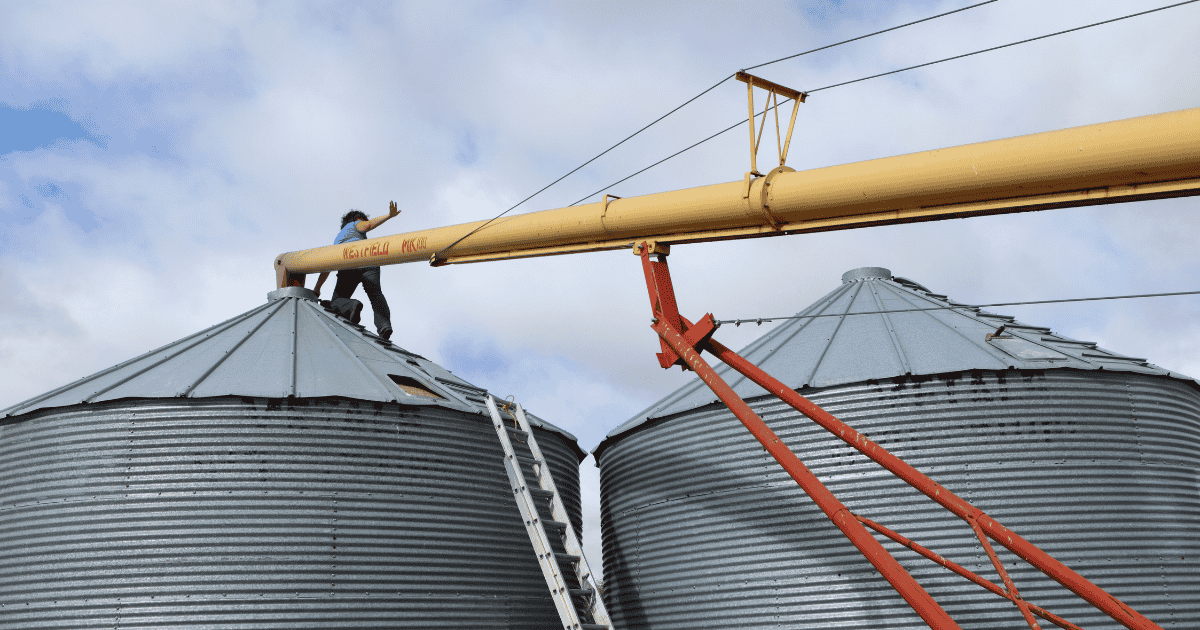
Working around stored grain presents serious hazards. Always use appropriate personal protective equipment (PPE), ladder guards and fall protection equipment when inspecting grain bins. Never enter a grain bin when working alone. If bin entry is required, ensure another person is present and aware of the work being performed.
Key Takeaways
- Dry canola to 8% moisture or less, and cool it to 15 degrees Celsius or lower as soon as possible after harvest.
- Monitor bins frequently with multiple sensor locations within the bin.
- Keep a close eye on stored canola in the first six weeks after harvest.
- Put safety first. Never enter a bin if working alone. Always use proper PPE, ladder guards and fall protection.
Lindsey Brooks
Agronomy Specialist
Manitoba Canola Growers
(204)-903-6509
Lindsey@manitobacanola.com